
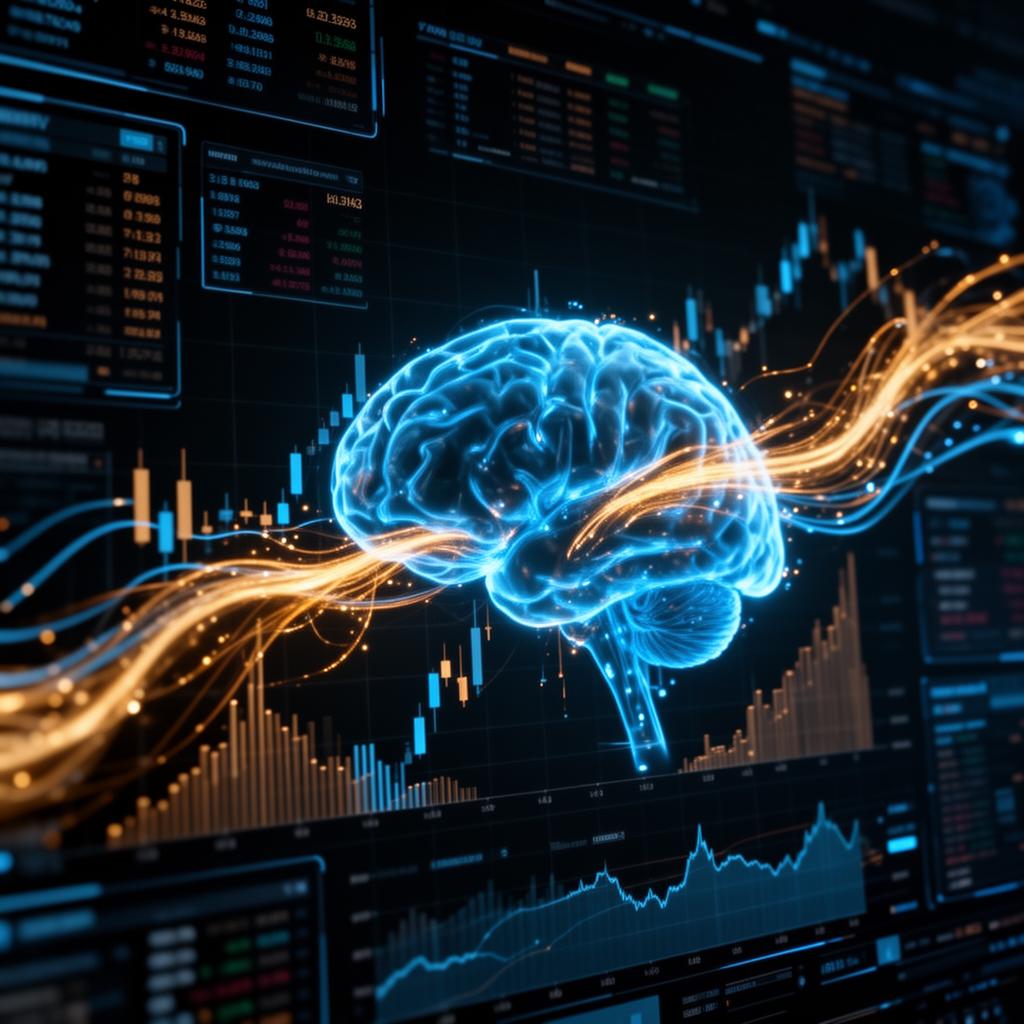
Somewhere right now, a machine is reading this quarter's earnings call from a mid-cap pharmaceutical company, parsing sentiment across 14,000 social media posts about the stock, cross-referencing supply chain data from satellite imagery of loading docks in Shenzhen, and deciding — in the time it takes you to sip your coffee — whether to buy 50,000 shares or short them.
This isn't science fiction. This is Tuesday on Wall Street in 2026.
Algorithmic and AI-driven trading now accounts for roughly 70% of all U.S. equity volume. The quant funds — Renaissance Technologies, Two Sigma, Citadel, D.E. Shaw — aren't fringe players. They are the market. And the latest generation of language models has given even mid-size hedge funds the ability to process information at a scale that would have been unimaginable five years ago.
What This Means for You (Honestly)
If you're an individual investor — or even a well-managed family portfolio — the temptation is to feel outgunned. And in one very specific sense, you are. You will never beat an algorithm at speed. You will never out-process the data firehose. You will not win the millisecond arbitrage game.
But here's the counter-intuitive truth that the quant world knows and rarely admits: most algorithmic strategies are optimized for short-term edge. They're fighting over pennies at the speed of light. The 10-year return on patience? That's not what they're built for.
"The edge that no algorithm can replicate is the ability to do nothing when everything screams at you to act."
Where AI Actually Helps Individual Investors
The real revolution for retail and advisory-level investors isn't about trading faster. It's about thinking better. Here's where AI is genuinely useful:
- Tax-loss harvesting at scale — identifying wash-sale-safe swaps across hundreds of positions in real time
- Portfolio risk modeling — stress-testing your allocation against scenarios like stagflation, credit crises, or commodity shocks
- Behavioral guardrails — systems that flag when you're about to make an emotional trade based on CNBC panic
- Alternative data analysis — using non-traditional datasets (foot traffic, app downloads, patent filings) to inform long-term theses
- Estate and cash flow planning — modeling thousands of retirement scenarios with Monte Carlo simulations that update dynamically
The Danger of AI-Powered Overconfidence
The flip side — and this is the part that concerns us as fiduciaries — is the wave of "AI-powered trading apps" promising retail investors hedge-fund-level returns. The pitch is always the same: our proprietary algorithm, trained on 30 years of data, will beat the market. Download the app. Link your account.
The reality? Most of these tools are glorified backtesting engines. They show you what would have worked — not what will work. Overfitting historical data is the oldest sin in quantitative finance, and AI makes it easier than ever to commit.
At Broadway Advisor Group, we use technology aggressively — but we use it as a lens, not a driver. Our investment philosophy is built on fundamentals, tax efficiency, and long-horizon thinking. AI sharpens those edges. It doesn't replace them.
The Bottom Line
AI is not going to make investing boring. It's going to make bad investing faster. The algorithms that matter aren't the ones executing trades in microseconds — they're the ones that help you see your portfolio clearly, plan with precision, and avoid the behavioral traps that have cost investors trillions over generations.
The best investment advice in the age of AI is the same as it's always been: have a plan, stick to it, and work with someone who's legally obligated to put your interests first.
The views expressed are for informational purposes only and do not constitute investment advice. Broadway Advisor Group is a registered investment adviser. Consult your advisor before making investment decisions.